
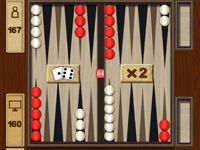
Classic Backgammon is a game of wits and luck between two people playing with the goal of getting all their stones into the house before the opponent can. So, it was in ancient times and remains true to this day, but the modern online version of the classic backgammon compares favorably with the original in terms of convenience and quick learning of the rules.
Would you like to play Backgammon Classic online against the computer or against a friend in a 2-player game? Now it’s easier than ever! Play backgammon for free and without registering on social networks, sending applications or viewing ads.
Features of playing Backgammon online
- You can play backgammon alone against the computer at a beginner or advanced level.
- A choice of the number of rounds for a complete victory is provided.
- The function of doubling bets is working.
- Multiple game board and checker designs to choose from.
The choice to play Classic Backgammon for two on one computer retains all the advantages of individual game settings. Even with the introduction of modern Internet capabilities, the way to play backgammon online differs little from the traditional one. You throw the dice, and the game cursor indicates where you can move the checkers, in accordance with the rules. The choice is yours. Direct your strategy towards blocking moves and hitting your opponent’s checkers. We wish you success!
Rules of the game in Classic Backgammon
You start with 15 checkers on a board of 24 narrow triangles. They alternate in color and are grouped into four sectors: Home and Outside field with a similar position of the opponent, in mirror image. Houses and outer boards are separated from each other by a bar.
Points are calculated automatically depending on the position occupied by each checker. The most extreme point is 24 points for one player and at the same time one for the opponent.
Backgammon starting arrangement: two stones for twenty-four points, five for thirteen, three for eight points and five for six points of each player.
Move forward according to the roll of the dice and strategically manage loopholes in the standard rules.
First and foremost, a piece can only be moved to an open triangle occupied by less than two opponent positions.
The number of faces dropped indicates the number of steps available, but the way to allocate this resource is always up to the player. For example: you threw 1:4, so you can move one checker 5 moves forward, go two 1 and 4 steps respectively.
When a double combination is dropped, the numbers are won back twice. A roll of 6:6 means that the player can use four sixes and any combination of checkers he thinks fit.
